




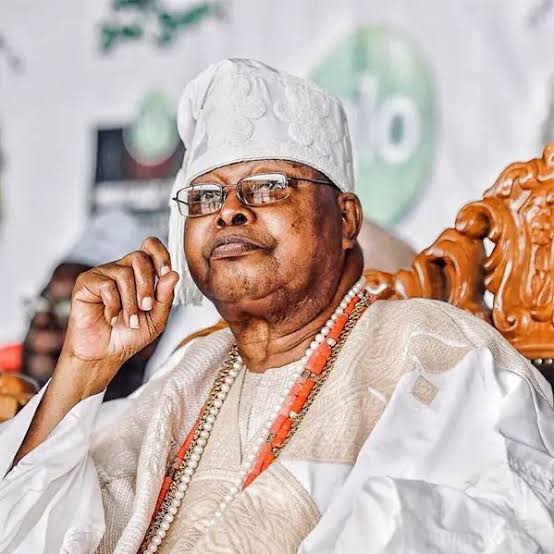
By Ajibola Fowowe
After the death of Oba Daniel Adesanya Gbelegbuwa II, who reigned 1933-1959, as the 54th Awujale. A new Awujale was elected.
In contrast to some traditional sects of the kingmakers, a young prince who had been away from the shores of Africa, studying Accounting in London was elected as the next king.
Through a letter dated 4 January 1960, referenced CB. 4 1/333, the Permanent Secretary in the Western Region Ministry of Local Government conveyed to the Local Government Adviser in Ijẹbu Ode approval of the Western Region Governor in Council, the appointment of a young Prince Sikiru Kayode Adetona as king, and his confirmation as the new Awujale of Ijebuland with effect from that date (4 January 1960).
It became a lot of Ijẹbu notables like the late Ọgbẹni-Ọja, Chief (Dr.) Timothy Adeọla Odutọla, Bọbasuwa I, Chief Emmanuel Okusanya Okunọwọ (MBE, KFNM); and Aṣiwaju, Chief Samuel Ọlatubọsun Ṣhonibare to arrange for the homecoming of the King-elect.
On 18 January 1960, the Head of the Ijẹbu Ode Regency Council, the Ọgbeni-Ọja, Chief Timothy Adeọla Odutọla formally presented the new traditional ruler to the whole world.
This presentation, which was a novelty, signalled the commencement of the installation ceremonies of the king-elect.
It was indeed, a new dawn in the annals of the Ijẹbu people. The king-elect thereafter proceeded to undergo the traditional seclusion at the Odo for three months.
Oba Sikiru Kayọde Adetọna, who had earlier been nominated among five others was the youngest of the princes, at Age 26.
The then Governor signed the Instrument of Office approving Prince Sikiru Kayọde Adetọna as Awujalẹ of Ijẹbuland. The formal coronation took place on Saturday, 2 April 1960.
The Awujale:
Ọba Sikiru Olukayọde Adetọna, Ọgbagba Agbotewole II, was born on 10 May 1934, into the Royal House of Anikinaiya of Ijẹbuland in his father’s house in Imupa, Ijebu Ode. His father was Prince Rufai Adetọna Adeleke (born c. 1902), a son of Ọba Adeleke, Ọgbagba Agbotewole I (c. 1825–1906), who was the Awujalẹ of Ijẹbuland from 1895 to 1906. His mother was Ajibabi Ọnaṣile, who was from the town of Ijebu Igbo.
The founder of the Royal House of Anikinaiya (or Anikilaya) was his great-grandfather Oba Anikilaya, Figbajoye Agboogunsa I, ( 1775–1854) who reigned from 1821 to 1854, and who himself was a son of Ọba Gbelegbuwa. As a member of the Royal House of Anikinaiya, his paternal family claimed descent from Olu-Iwa, the semi-legendary first Awujalẹ and Ọbanta, another founder of the Ijẹbu kingdom.
His stern leadership skills and brilliance was notable as he became a member of the Southwest Prominent Kings who alongside Late Oba Sir Adesoji Aderemi ( then Oni of Ife) participated in Forging a course towards Nigeria independence.
Furthermore, he helped in the building of modern ijebus promoting cultures and social reforms.
However, by 1981 Oba Sikiru Adetona, Awujale of Ijebuland was controversially suspended and later deposed, then by Ogun State Governor Victor Olabisi Onabanjo, who was an indigene of Ijebu and a close ally.
The basis of the conflicts was traced down to past events relating with Oba Sikiru Adetona strife with Obafemi Awolowo, because of his friendship with Modele Akintola, daughter of Ladoke Akintola, then West Premier, who was considered as an ‘ enemy ‘ unfortunately Olabisi Onabanjo was an adherent follower of Awolowo.
The second reason was suggested to be a ‘pipe importation contract’ Ladoke Akintola gave out the contract to Chief Okunowo, an Ijebu Indigene however, Awolowo was not in support because he wanted the ‘pipe to be locally made ‘ to foster local production.
When Olabisi Onabanjo became the Governor, he sidelined The Awujale. He tried to frustrate the King, putting junior Kings above him.
On a course, the king wrote a letter to the Governor to informing that he would be traveling to London on health reasons.
The governor ignored the letter asking the king to remain in Ijebu. The King refused and he proceeded to his traveling.
The conflict stemmed from political, and personal tensions, including disputes over government representation and the Oba’s travel abroad without official approval.
A government commission found Oba Adetona guilty of unspecified charges, leading to his removal.
He challenged this in court, and in 1984, the court ruled the deposition illegal due to lack of proper procedure. After a military coup ousted Onabanjo, the new military governor restored Oba Adetona to his throne, ending the crisis.
Oba Sikiru Adetona despite all odds became the second longest serving king after the demies of Oba Lamidi Adeyemi ii the Alaafin of Oyo.
